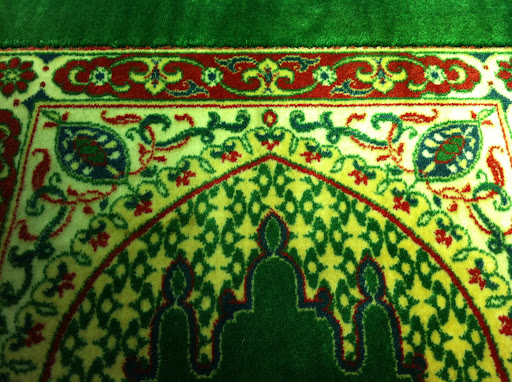
Thursday, 6 September 2012

Surah Saad - Sad state of the separated Ummah

 عن أبي سعيد الخدري رضي الله عنه قال :

  غزونا مع رسول الله صلى الله عليه وسلم لست عشرة مضت من رمضان ، فمنا من صام ومنا من أفطر ،فلم يعب الصائم على المفطر ، ولا المفطر على الصائم


Abu Saeed al-Khudri (radiyallahu anhu) narrates:

 “We waged battle at the side of Rasulullah صلى الله عليه وسلم when 16 days of Ramdaan had passed. Some of us fasted and some did not. Neither did those who fasted find fault with those who did not fast; nor did those who did not fast find fault with those who fasted.” [Muslim]


Another Ramadaan has passed, and inshallah we have all achieved our aims. Major themes of the month are of course Taqwa, empathy for one's fellow human being, patience etc


The above incident of respect for difference of opinions at the Battle of Badr might not be  a primary objective of the month,  yet the fact is that  occurred during Ramadaan as well, in the sacred presence of Rasulullah صلى الله عليه وسلم. No aspect of his sacred life is insignificant. As such, Ramadaan should also be a time when the Ummah  renews their commitment to respecting each others' opinions, as long as the view expressed is not clearly opposed to the principles of Shari'ah.

Sadly, we all know that this is not the case. Every Muslim country, school of thought, organisation, tribe, family and individual is  an authority unto themselves, in effect ignoring the ultimate sovereignty of Allah. If I declare myself to be correct and perfect in all matters, "my way or the highway" have I not claimed partnership with Allah al-Haqq as-Subbuh? 

An incident this Ramadaan demonstrated to me how incurably petty the Ummah still is. As a practitioner of Shafi'i Fiqh, I do not prostrate at the recitation of Surah Saad. Herewith link to the juristic discussion with a brief translation.

I have practised according the school I observe and never imposed this issue on others. This Ramadaan a Hanafi Imaam of a Masjid discussed the issue with me, mentioning a ruling he had received. He declared that he would announce this ruling in order to educate the Shafi'i members of the community.  

I reflected that if a Hanafi is willing to educate others, my silence in the face of theological chauvinism was not justified.  I mentioned the matter to the Hanafi Imaam at the Masjid I was observing Taraaweeh and asked would he felt about him making a similar announcement. He said that I should make the announcement and I did so.

He later informed me that some Hanafi "Ulama" had approached him. They were upset and insisted that they had never heard of something like this before.

Whether one prostrates or not during Saad is a juristic discussion, which might or might not hold significance to some. What should however concern all of us are the facts this incident brought to light:

  •  This Ummah has some  scholars who have such fossilised mentalities that they can paraphrase the idolatrous Egyptian response to Musa 'alayhis salaam as a proof, "We have never heard of this from our forebears of old!" [al-Qasas: 36]
  • They regard such an attitude as a virtue!
  • They are not content with stifling opinion in their own school, but consider it the greatest act of worship to impose their will and views on other schools as well.
  • Scholars are apparently exempt from seeking proof for rulings and can substitute query with gossip. 
  • Tolerance was for the Sahaabah radiyallahu anhum. Our opinions are apparently so elevated that all must toe the line.
  • Ramdaan is all about the individual. Nobody has the foresight to ponder how detrimental the effects of our intolerance are upon the already fragmented Ummah.

There are chauvinists and tolerant folk amongst all groups. If the article creates the impression that I am targeting a specific group, then I seek Allah's forgiveness. The aim is to draw attention to a disease which must be remedied. If we cannot train ourselves to behave as Ummatis of Muhammad صلى الله عليه وسلم, even during Ramadaan, what does this pose for our future?


سليمان الكندي

Sunday, 1 July 2012

Do you use Tech, or does it use you?

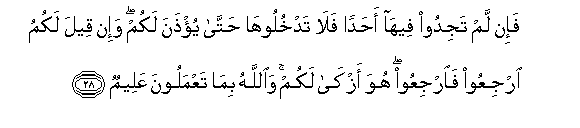
 And if you do not find anyone in [their homes] do not enter until permission has been granted unto you. If you are told to go away, then go away. That is more pure for you and Allah knows well what you do. [an-Nur: 28]

Mufassirun have discussed whether one verse of the Quraan can be said to have greater virtue than others, or whether they are equally virtuous as the Speech of Allah. In either case what cannot be denied is that various parts of the Quraan have had differing impacts in various circumstances.


Consider the incident which Thabit bin Qays رضي الله عنه narrates, as recorded by Abu Dawud. Umm Khallad al-Ansariyah رضي الله عنها rushes to Rasulullah صلى الله عليه و سلم, her mind greatly unsettled with the probability that her son has been killed. A man confirms that her son has indeed been martyred, but asks how did she have the presence of mind to cover her face when entering the presence of Rasulullah صلى الله عليه و سلم despite her obviously perturbed state. There is not enough gold in the world (or perhaps I should say iPads) to equal the value of her words. The venerable lady replies, "I may have lost my son, but I shall never lose my modesty."


Allahu Akbar!


What is still more amazing is that that lady belonged to a generation and culture which a short while earlier had been walking around with uncovered heads and exposed breasts (or am I confusing this with contemporary Muslimahs?). These ladies were the products of Surah an-Nur, a Surah which laid the foundation for the edifice of modesty and social interaction in Islamic civilisation. To add yet another amazing aspect of these ladies. The males had had three previous verses to wean them off the primarily masculine activity of drinking wine, before the final fourth prohibition was revealed. On the other hand, the ladies submitted the instant Allah commanded them to dress modestly. They tore down old and ugly curtains to cover themselves. They had no concern for their appearance. Their only concern was to obey Allah. Were I to live for a century, I would prefer that single act to all my good deeds.


Now let us examine some other aspects of Islamic etiquette directly or indirectly derived from an-Nur:


  • A Muslim does not enter another person's home without permission.
  • Permission can only be sought thrice, thereafter leave.
  • If there was no appointment made, one is not obliged to let others enter the privacy of one's home.
  • When two people are speaking, a third should not butt in without permission.


Now let us ask ourselves in all honesty, if I am not obliged to respond to one who is physically at my door, how can I possibly be obliged to answer a cell phone?


The manners of Muslims are absolutely deplorable when one looks at how they deal with just this one aspect of technology. Whether one is speaking to a friend, spouse, teacher or parent, as soon as the mobile rings, 14 centuries of Islamic culture and etiquette succumbs to the demands of Nokia, Apple, Blackberry etc. The rights of the gathering are forgotten as well as the respect for seniors. Conversation is immediately cut off. Everyone is forgotten and the cell phone answered. I have even witnessed Ulama teaching a Hadith, breaking away from the lesson to answer the call. Yet one finds Western businessmen first seeking permission from each other before taking a call. That is supposed to be our way. They are using technology, not being used by technology.


We always say that technology cannot be good or bad in itself, it is how you use it. It is rather sad that a Raafidi, Ali al-Alawi, pointed out that a product of a society must innately include the values of that society, it cannot be neutral. On the other hand, scholars born of Sunni households, happily endorse everything the West churns out, without considering the impact on Sunnah values and culture.


I am not saying that we become Luddites and smash all technology. After all, how did I write this message, if not by the use of technology? What I mentioned is just an example. Answering your phone might not be a sign of Qiyaamah, but let us not be mindless drones. Consider carefully, are you are using technology, or is technology using you? The next time your Samsung rings, ask, "Am I being used to eliminate Surah an-Nur from the Ummah?"


Just a thought, and I would like to hear your thoughts. In just over a year this blog has reached 6,000 hits from all over the world. Not much some would say, but considering that I haven't promoted this blog, I never expected this readership. But no comments? Come on guys! If you got something positive out of this, let me know so that I know what you want to read. If I've erred it's your duty to tell me.

سليمان الكندي

Do you use Tech, or does it use you?

 And if you do not find anyone in [their homes] do not enter until permission has been granted unto you. If you are told to go away, then go away. That is more pure for you and Allah knows well what you do. [an-Nur: 28]

Mufassirun have discussed whether one verse of the Quraan can be said to have greater virtue than others, or whether they are equally virtuous as the Speech of Allah. In either case what cannot be denied is that various parts of the Quraan have had differing impacts in various circumstances.


Consider the incident which Thabit bin Qays رضي الله عنه narrates, as recorded by Abu Dawud. Umm Khallad al-Ansariyah رضي الله عنها rushes to Rasulullah صلى الله عليه و سلم, her mind greatly unsettled with the probability that her son has been killed. A man confirms that her son has indeed been martyred, but asks how did she have the presence of mind to cover her face when entering the presence of Rasulullah صلى الله عليه و سلم despite her obviously perturbed state. There is not enough gold in the world (or perhaps I should say iPads) to equal the value of her words. The venerable lady replies, "I may have lost my son, but I shall never lose my modesty."


Allahu Akbar!


What is still more amazing is that that lady belonged to a generation and culture which a short while earlier had been walking around with uncovered heads and exposed breasts (or am I confusing this with contemporary Muslimahs?). These ladies were the products of Surah an-Nur, a Surah which laid the foundation for the edifice of modesty and social interaction in Islamic civilisation. To add yet another amazing aspect of these ladies. The males had had three previous verses to wean them off the primarily masculine activity of drinking wine, before the final fourth prohibition was revealed. On the other hand, the ladies submitted the instant Allah commanded them to dress modestly. They tore down old and ugly curtains to cover themselves. They had no concern for their appearance. Their only concern was to obey Allah. Were I to live for a century, I would prefer that single act to all my good deeds.


Now let us examine some other aspects of Islamic etiquette directly or indirectly derived from an-Nur:


  • A Muslim does not enter another person's home without permission.
  • Permission can only be sought thrice, thereafter leave.
  • If there was no appointment made, one is not obliged to let others enter the privacy of one's home.
  • When two people are speaking, a third should not butt in without permission.


Now let us ask ourselves in all honesty, if I am not obliged to respond to one who is physically at my door, how can I possibly be obliged to answer a cell phone?


The manners of Muslims are absolutely deplorable when one looks at how they deal with just this one aspect of technology. Whether one is speaking to a friend, spouse, teacher or parent, as soon as the mobile rings, 14 centuries of Islamic culture and etiquette succumbs to the demands of Nokia, Apple, Blackberry etc. The rights of the gathering are forgotten as well as the respect for seniors. Conversation is immediately cut off. Everyone is forgotten and the cell phone answered. I have even witnessed Ulama teaching a Hadith, breaking away from the lesson to answer the call. Yet one finds Western businessmen first seeking permission from each other before taking a call. That is supposed to be our way. They are using technology, not being used by technology.


We always say that technology cannot be good or bad in itself, it is how you use it. It is rather sad that a Raafidi, Ali al-Alawi, pointed out that a product of a society must innately include the values of that society, it cannot be neutral. On the other hand, scholars born of Sunni households, happily endorse everything the West churns out, without considering the impact on Sunnah values and culture.


I am not saying that we become Luddites and smash all technology. After all, how did I write this message, if not by the use of technology? What I mentioned is just an example. Answering your phone might not be a sign of Qiyaamah, but let us not be mindless drones. Consider carefully, are you are using technology, or is technology using you? The next time your Samsung rings, ask, "Am I being used to eliminate Surah an-Nur from the Ummah?"


Just a thought, and I would like to hear your thoughts. In just over a year this blog has reached 6,000 hits from all over the world. Not much some would say, but considering that I haven't promoted this blog, I never expected this readership. But no comments? Come on guys! If you got something positive out of this, let me know so that I know what you want to read. If I've erred it's your duty to tell me.

سليمان الكندي
Tuesday, 15 May 2012

Olympics - triumph of Paganism & Dajjal


  عَنْ عَائِشَةَ ، أَنّ النَّبِيَّ صَلَّى اللَّهُ عَلَيْهِ وَسَلَّمَ كَانَ يَقُولُ : " اللهم إنى إعوذ بك من عذاب القبر وَأَعُوذُ بِكَ مِنْ فِتْنَةِ الْمَسِيحِ الدَّجَّالِ 


‘Āishah رضي الله عنها  narrates that the Nabī صلى الله عليه و سلم  used to say, “O Allāh I seek Your protection against the punishment of the grave and I seek Your protection against the tribulation of the false Messiah Dajjāl.” [Aḥmad]
One wonders how to reconcile the obsession of Muslims with, “When is Mahdī coming?” with their simultaneous involvement, if not promotion, in the forerunning or welcoming ceremonies for the Dajjāl.  

It is certainly true that our Nabī صلى الله عليه وسلم commanded, "Your body has a right over you." Islām commands balance and one's body must be cared for as a vehicle which takes us towards the Hereafter. Sport in itself, and looking after one’s body may even be forms of worship within the correct context, yet one is absolutely dumbfounded when Muslims  use the sacred Ḥadīth to justify sporting events which may entail: 

·         Neglect of Ṣalāh.
·         Exposure and glancing at prohibited regions of the body e.g. the thighs.
·         Intermingling of sexes.
·         Contamination with intoxicants and other filths.
·         Wasting not of millions, but billions whilst so many starve. 

Of particular concern in the modern context is the spiritual and political harm sports can cause to Muslims in regards:
·         Being used as a political tool to distract the masses from greater issues. Even educated Christians are aware of this nefarious device.
·         Creating a cult of hero-worship whereby the Muslim youth have greater emotional attachment to sportsmen than to the Rasūl صلى الله عليه وسلم and friends of Allāh. 

All these concerns however pale into insignificance in comparison to the triumph of open Paganism and idol worship at the “greatest” of all sporting events, the Olympics. 

Such words may appear extreme and harsh even to myself. For one willing however to keep an open mind, I present certain facts for your perusal – and as this is not meant to be an encyclopaedia – you are thereafter welcome to conduct further research and draw your own conclusions. 

First ask yourself what is the meaning of Olympics?
Olympia was a sanctuary in ancient Greece which housed the gigantic gold and ivory idol of Zeus. Games were held as a form of worship to this idol – hence the word Olympics

If I were exposed to such information for the first time I would respond, “Well, so what? That doesn’t mean that participating or watching the modern games involves any form of idol-worship!”

Sadly such a response does not consider various realities of the modern Pagan Olympics. To start off, even the Olympic anthem is nothing short of a hymn to this idol, Zeus the Lightning "god":

O Ancient immortal Spirit, pure father
Of beauty, of greatness and of truth,
Zeus, lightning "god"
Descend, reveal yourself and flash like lightning here,
within the glory of your own earth and sky.

At running and at wrestling and at throwing,
Shine in the momentum of noble contests,
And crown with the unfading branch
And make the body worthy and ironlike. (twice)

Plains, mountains and seas glow with you
Like a white-and-purple great temple,
And hurries at the temple here, your pilgrim, (twice)
O Ancient immortal Spirit, every nation. (twice)

Consider also that the imagery of the modern games is consistently Pagan:
Nike, Athens 2004
The Greek victory goddess is always on the medals. If the games are purely for sport, why the need to evoke yet another supposedly dead idol?

Zeus & Nike, Athens 1896 


The Olympic Flame represents the fire taken from Zeus. It is still lit at his sanctuary in an openly Pagan ceremony and passed onto the games! The following is the prayer intoned by the high priestess Maria Nafpliotou during the ceremony for the 2010 Vancouver games:


Apollo God of Sun and the idea of light send your rays and light the sacred torch for the hospitable city of Vancouver and you Zeus give peace to all peoples on earth and wreath the winners of the Sacred race.


Do you also inadvertently worship Apollo?


In the 1996 Atlanta games, the temple of Zeus was resurrected. 

Consider the opening ceremony at the 2004 Athens games:
“In the next sequence, Eros, the Greek god of love, was introduced flying over a pair of lovers frolicking in the pool of water located in the center of the stadium. ... Eros flew over the parade, occasionally touching or stepping on the floats moving beneath him, thus reinforcing the theme of love and passion as the source for all history... The first float featured the iconic image of Minoan civilization: that of the fertility goddess clad in a bodice exposing her breasts and clutching serpents in both hands. ....At the end of the parade, "Eros" lowered enough to help a pregnant woman remove her outer garment....”

 
What is most saddening is that a great many Christians protest against this Polytheism, but I have yet to see a response from the Muslim world. 

The Olympics are undeniably events which distract one from the majesty of Allāh. Islām is not against caring for the human body, but is this the justification for millions of Muslim to sit at their Dajjāl screens, munching away at their snacks? They turn off their mental faculties and participate in occult ceremonies which bear the hallmarks of the Dajjāl – Polytheism, music and deception. The world is being programmed or conditioned to accept the “reality” of gods besides Allāh.   

It is not sufficient to pray, “and I seek Your protection against the tribulations of the false Messiah, the Dajjāl..” Implicit in the Du‘ā’ is for us to open our eyes and save ourselves from entrapment.

Allāh save us all.

سليمان الكندي
Olympics - triumph of Paganism & Dajjal


  عَنْ عَائِشَةَ ، أَنّ النَّبِيَّ صَلَّى اللَّهُ عَلَيْهِ وَسَلَّمَ كَانَ يَقُولُ : " اللهم إنى إعوذ بك من عذاب القبر وَأَعُوذُ بِكَ مِنْ فِتْنَةِ الْمَسِيحِ الدَّجَّالِ 


‘Āishah رضي الله عنها  narrates that the Nabī صلى الله عليه و سلم  used to say, “O Allāh I seek Your protection against the punishment of the grave and I seek Your protection against the tribulation of the false Messiah Dajjāl.” [Aḥmad]
One wonders how to reconcile the obsession of Muslims with, “When is Mahdī coming?” with their simultaneous involvement, if not promotion, in the forerunning or welcoming ceremonies for the Dajjāl.  

It is certainly true that our Nabī صلى الله عليه وسلم commanded, "Your body has a right over you." Islām commands balance and one's body must be cared for as a vehicle which takes us towards the Hereafter. Sport in itself, and looking after one’s body may even be forms of worship within the correct context, yet one is absolutely dumbfounded when Muslims  use the sacred Ḥadīth to justify sporting events which may entail: 

·         Neglect of Ṣalāh.
·         Exposure and glancing at prohibited regions of the body e.g. the thighs.
·         Intermingling of sexes.
·         Contamination with intoxicants and other filths.
·         Wasting not of millions, but billions whilst so many starve. 

Of particular concern in the modern context is the spiritual and political harm sports can cause to Muslims in regards:
·         Being used as a political tool to distract the masses from greater issues. Even educated Christians are aware of this nefarious device.
·         Creating a cult of hero-worship whereby the Muslim youth have greater emotional attachment to sportsmen than to the Rasūl صلى الله عليه وسلم and friends of Allāh. 

All these concerns however pale into insignificance in comparison to the triumph of open Paganism and idol worship at the “greatest” of all sporting events, the Olympics. 

Such words may appear extreme and harsh even to myself. For one willing however to keep an open mind, I present certain facts for your perusal – and as this is not meant to be an encyclopaedia – you are thereafter welcome to conduct further research and draw your own conclusions. 

First ask yourself what is the meaning of Olympics?
Olympia was a sanctuary in ancient Greece which housed the gigantic gold and ivory idol of Zeus. Games were held as a form of worship to this idol – hence the word Olympics

If I were exposed to such information for the first time I would respond, “Well, so what? That doesn’t mean that participating or watching the modern games involves any form of idol-worship!”

Sadly such a response does not consider various realities of the modern Pagan Olympics. To start off, even the Olympic anthem is nothing short of a hymn to this idol, Zeus the Lightning "god":

O Ancient immortal Spirit, pure father
Of beauty, of greatness and of truth,
Zeus, lightning "god"
Descend, reveal yourself and flash like lightning here,
within the glory of your own earth and sky.

At running and at wrestling and at throwing,
Shine in the momentum of noble contests,
And crown with the unfading branch
And make the body worthy and ironlike. (twice)

Plains, mountains and seas glow with you
Like a white-and-purple great temple,
And hurries at the temple here, your pilgrim, (twice)
O Ancient immortal Spirit, every nation. (twice)

Consider also that the imagery of the modern games is consistently Pagan:
Nike, Athens 2004
The Greek victory goddess is always on the medals. If the games are purely for sport, why the need to evoke yet another supposedly dead idol?

Zeus & Nike, Athens 1896 


The Olympic Flame represents the fire taken from Zeus. It is still lit at his sanctuary in an openly Pagan ceremony and passed onto the games! The following is the prayer intoned by the high priestess Maria Nafpliotou during the ceremony for the 2010 Vancouver games:


Apollo God of Sun and the idea of light send your rays and light the sacred torch for the hospitable city of Vancouver and you Zeus give peace to all peoples on earth and wreath the winners of the Sacred race.


Do you also inadvertently worship Apollo?


In the 1996 Atlanta games, the temple of Zeus was resurrected. 

Consider the opening ceremony at the 2004 Athens games:
“In the next sequence, Eros, the Greek god of love, was introduced flying over a pair of lovers frolicking in the pool of water located in the center of the stadium. ... Eros flew over the parade, occasionally touching or stepping on the floats moving beneath him, thus reinforcing the theme of love and passion as the source for all history... The first float featured the iconic image of Minoan civilization: that of the fertility goddess clad in a bodice exposing her breasts and clutching serpents in both hands. ....At the end of the parade, "Eros" lowered enough to help a pregnant woman remove her outer garment....”

 
What is most saddening is that a great many Christians protest against this Polytheism, but I have yet to see a response from the Muslim world. 

The Olympics are undeniably events which distract one from the majesty of Allāh. Islām is not against caring for the human body, but is this the justification for millions of Muslim to sit at their Dajjāl screens, munching away at their snacks? They turn off their mental faculties and participate in occult ceremonies which bear the hallmarks of the Dajjāl – Polytheism, music and deception. The world is being programmed or conditioned to accept the “reality” of gods besides Allāh.   

It is not sufficient to pray, “and I seek Your protection against the tribulations of the false Messiah, the Dajjāl..” Implicit in the Du‘ā’ is for us to open our eyes and save ourselves from entrapment.

Allāh save us all.

سليمان الكندي
Friday, 30 March 2012

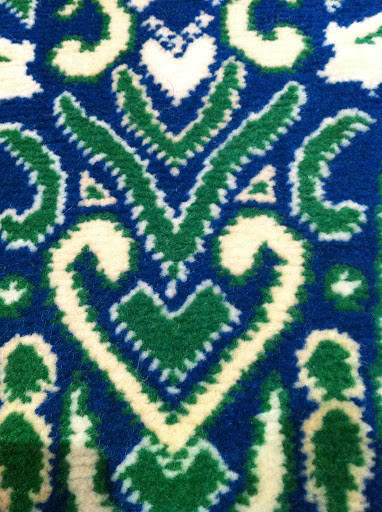
What images do you see in your Masjid carpet?


عن النعمان بن بشير رضى الله عنه أن رسول الله صلى الله عليه و سلم قال :

 " عباد الله لتسون صفوفكم أو ليخالفن الله بين وجوهكم" أخرجه البخارى.

An-Nu‘mān bin Bashīr رضى الله عنهnarrated that Rasūlullāh صلى الله عليه وسلم said, “O slaves of Allāh! Straighten or rows or Allāh will certainly turn your faces against each other.” [al-Bukhārī]


Two common complaints amongst Muslims today are:


  1. Why can't Muslims unite? Why doesn't organisation X unite with organisation Y?

  2. Why do we have so many problems?


Both questions require in depth replies, but certain factors, however small, need to be considered:


  1.        How can we unite when we ignore the basic prescriptions of Rasūlullāh صلى الله عليه وسلم, such as straightening our Ṣufūf during Ṣalāh? Did he not warn us that not doing so would cause disunity? No amount of conferences and movements can create unity when the Most Truthful Nabī صلى الله عليه وسلم has warned of dissension due to crooked rows.

  2.        Ṣalāh is our communication with the solver of all problems. What communication do we have if we have no concentration?


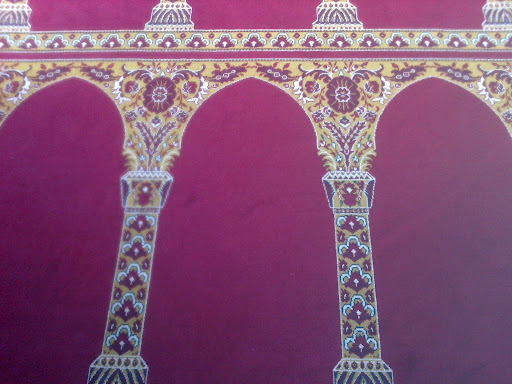
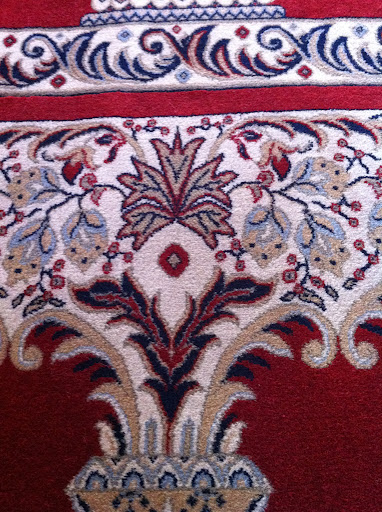
As trivial or even absurd as it may seem to the respected reader, I draw attention to the fact that – unintentionally or otherwise – the carpets in our Masājid are designed to create crooked rows and distracted Ṣalāh. There are of course a host of additional factors to consider, but every factor should be considered without bias. Are disunity and incorrect Ṣalāh trivial matters?


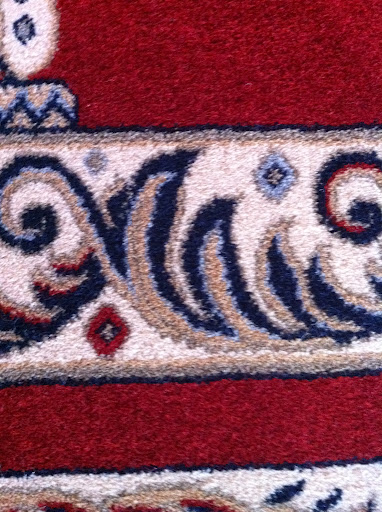
Three rows per Ṣaff

Our insistence on having needlessly fanciful carpets and not sufficing with a simple, thin straight line causes a phenomenon where up to three rows can be witnessed standing in a single Ṣaff. How can the Ummah unite when we have an attitude ultimately based on egotism, outdoing others and extravagance?

See below picture. The three black lines point to the three rows confused Muṣallīs can choose from.


 ?Where do I stand


Three row, one Saff


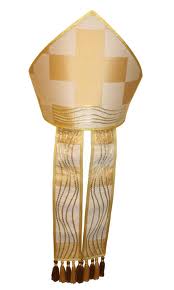
Mitre

Has the Pope visited your local Masjid recently?


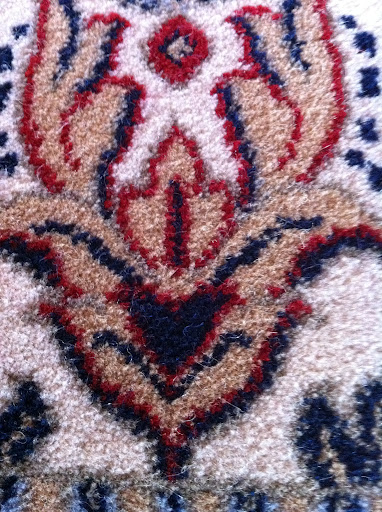
Chances are that he frequents your Masjid more often you do. Do you know that some Masjid carpets are imported from Catholic Belgium and Spain? Is it mere coincidence then that the Cross finds its way into the Masjid by way of Muslim paid for carpets? See below and decide.


? Crosses extending diagonally from the bottom


Catholic Mitre?


Are those 5 Palm trees going vertically up each "pillar" or 5 Crosses?


Pareidolia?

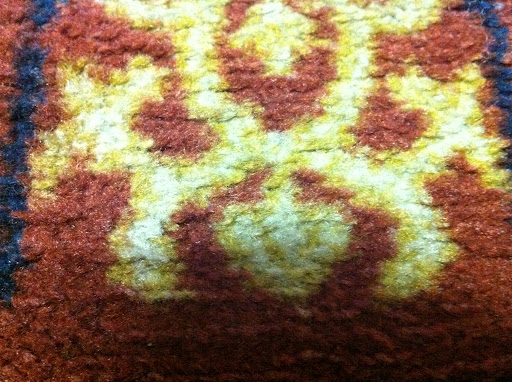
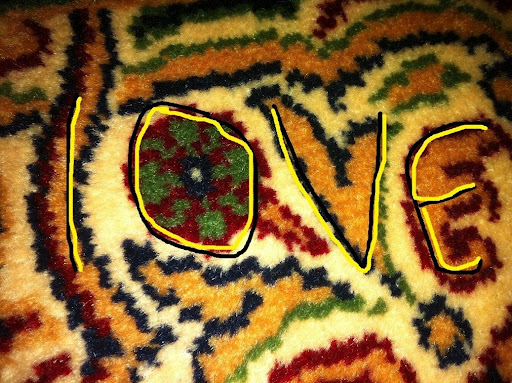
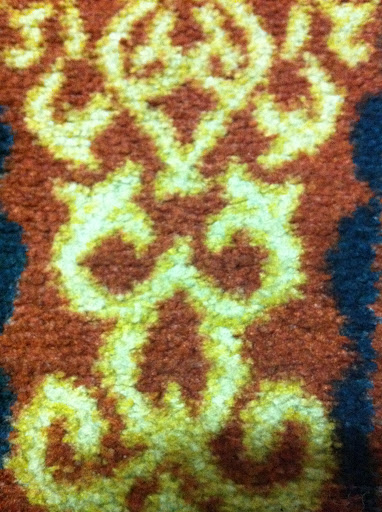
Pareidolia is the concept in Psychology which explains why the human mind tries to form images out of random patterns. This is a fact which we all experience. This on its own is sufficient reason why our Masjid carpets should be plain, without Pareidolia invoking patterns and supposed flowers.


Sometimes words are formed, find the love below:


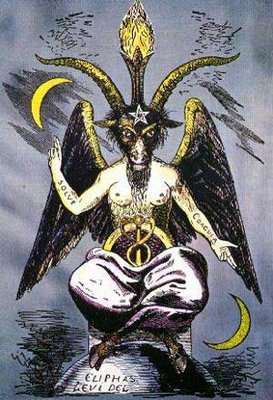
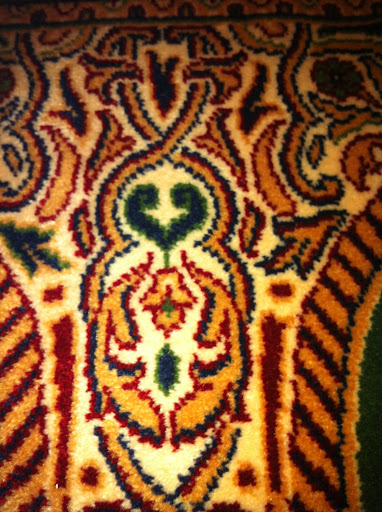
Now how often do you see a FACE distracting you from Ṣalāh?


A distraction from Ṣalāh would be sufficient cause for concern. What is more worrying is if you compare these faces. Why are they almost all the same? Why no other human face? No women for example. Note the eyes, beard, horns and goatish face in all of them and compare with Mister below. Makes you think doesn’t it?


Eye of Horus


Eye of Horus

Finally, have you heard of the  Egyptian idol the Eye of Horus and which mightpossibly represent ad-Dajjāl? Even he might be visiting your Masjid.


Masjid Carpet


Eye of Horus


Dollar - Masonic Eye


All this may be far-fetched coincidences, but this does not negate the fact that we with our own hands and money bring things into the Masjid which divide the Ummah and destroy Ṣalāh.


An appeal is made to the Ummah to rectify their intention when building houses of Allah. Stop  our needless extravagance and fancies. Plain carpets can be installed when a new Masjid is built or when a carpet becomes worn. The alternative is crooked rows and distractions in Ṣalāh.  


Plain but beautiful is possible


سليمان الكندي